
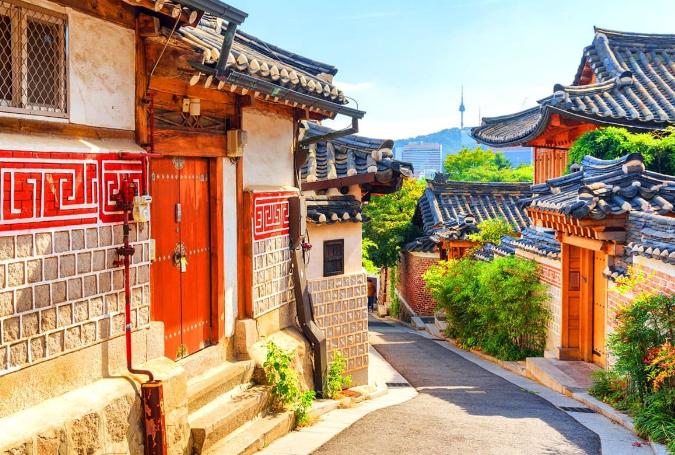
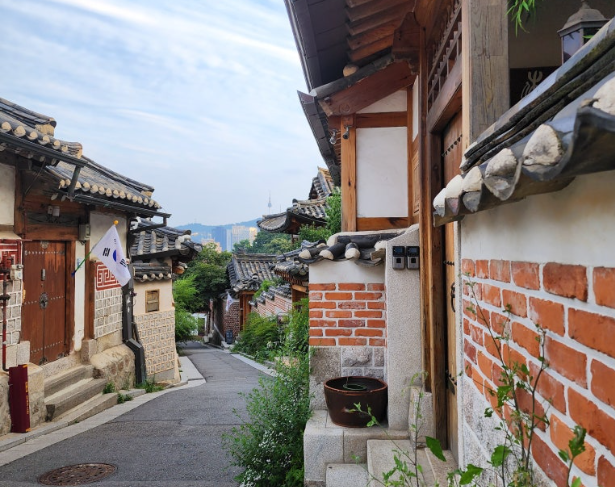
Bukchon Hanok Village refers to an area where hanoks are concentrated in Gahoe-dong and Samcheong-dong, Jongno-gu in Seoul.
One of the most popular places for foreign tourists to visit in Seoul is Bukchon Hanok Village, a place where you can experience the beauty of traditional Korean houses and the way our ancestors lived, and it has quickly become a tourist attraction for foreigners who come to Korea to experience the most authentic Korean atmosphere.
1. Introduce of Bukchon Hanok Village
Bukchon was traditionally a residential area of the nobility during the Joseon period, and did not undergo any significant changes until the 1920s. However, in the 1930s, Seoul’s administrative districts were expanded and its urban structure was transformed into its modern appearance. Housing management companies purchased large plots of land, woods and fields and built a group of medium-sized hanok (traditional Korean house) on them. The current hanok residential areas such as Gahoe-dong (#11 and #31), Samcheong-dong (#35), and Gye-dong (#135) were all established at that time.
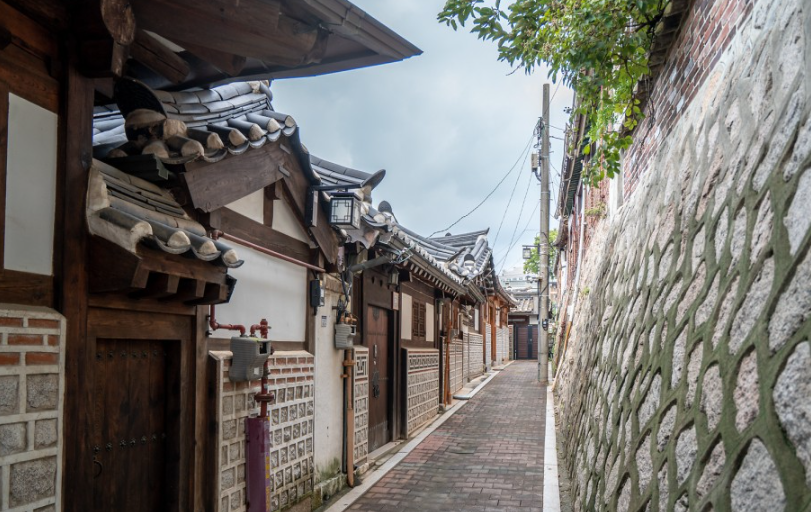
For foreigners visiting Seoul, Bukchon Hanok Village is said to be the most authentic Korean neighborhood. Bokchon Hanok Village is an area where the upper class lived during the Joseon Dynasty, and is home to traditional Korean houses with a 600-year history.
Bukchon hanoks are characterized by two main features: an evolved construction method and a tendency to decorate. Although they are not fully dignified when compared to traditional hanoks, such as low roof gables, guldori, overlapping eaves, and a large number of rooms in a narrow daylight, Bukchon hanoks condense the composition and beauty of hanoks. As seen in the advertisements for hanok sales at the time, Bukchon’s hanoks reflected the demand for density and anonymity as urban housing, and became the new urban housing type of the time.
2. History of Bukchon Hanok Village
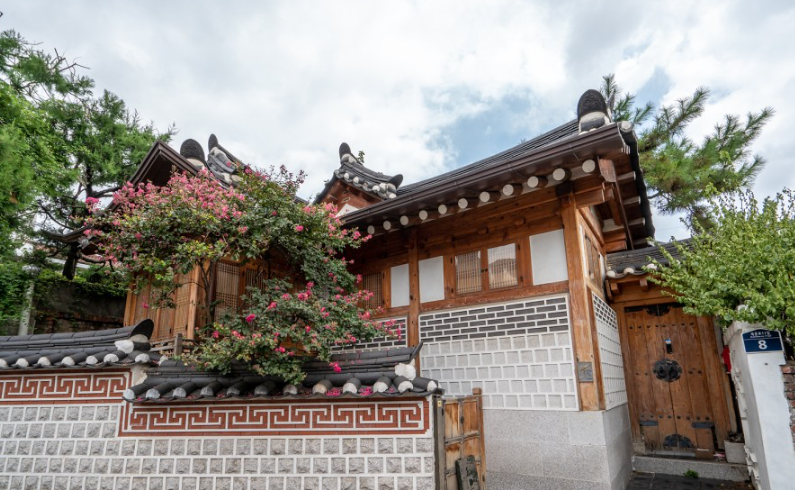
At the end of the Joseon period, large area of land were divided into small housing lots due to social and economic reasons; and it is estimated that the current hanok arrangement – in which the houses stand shoulder to shoulder – emerged in the 1930s. Such changes reflected various social phenomena related to the expanding population in the city center. Bukchon’s relics and cultural heritages spanning the Joseon and modern periods tell the history of the area to visitors.
1) Residential Area of Influential Men in Bukchon during the Joseon Period
The most characteristic features of Bukchon are its topography and waterways. The terrain of Bukchon is low in the south and gets higher and more sloped toward the north, forming four valleys. Waterways flow along the valleys, and roads are built alongside the waterways. Therefore, the shape of the roads naturally follows the waterways to the south, and this can be seen through Samcheongdong-gil, Gahoe-dong-gil, Gyedong-gil, and Wonseo-dong-gil, which are the main north-south streets of Bukchon to this day. Located in the center of Hanyang, between Gyeongbokgung and Changdeokgung palaces, and on the southern slope of the mountain range connecting Bukak and Eungbong, Bukchon has long been the residence of the ruling family. According to the 1906 family registration data, out of the total population of 10,241 (1,932 households) in Bukchon, 43.6% of them were nobles and officials, indicating that the area was centered around the houses of nobles and officials.
2) Bukchon of the Japanese Occupation Period
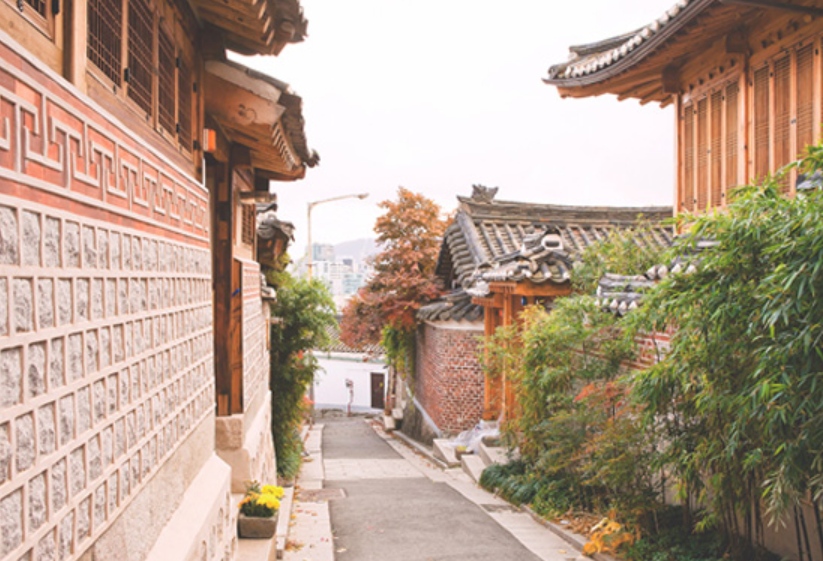
Bukchon, which was the residence of many independence activists during the Japanese occupation, experienced rapid urbanization and population concentration, and subdivision-type development emerged to alleviate the housing shortage. With the emergence of housing management companies that sought to profit from the sale and purchase of houses, the housing shortage after 1912 led to the rapid construction of hanoks in a different form than before through the division of medium and large plots. The areas of 31 and 11 Gahoe-dong, Samcheong-dong, and 35 Samcheong-dong, which are now representative hanok densities in Bukchon, were all collectively built by housing management companies at this time, and were built on a large scale and then sold. The hanoks built during this period differed from previous hanoks in that new materials such as glass and tiles were used, the floor plans were standardized to a certain extent, and they were built with a street system.
These hanok residences were continuously built until the early 1960s after liberation, and almost all areas were filled with hanoks, except for a few large sites that were left for schools and public facilities.
3) Relocation of Schools and Changes of Bukchon’s Scenery in the 1970s
With the development of Gangnam in earnest, starting with the Yeongdong district development project from the late 1960s to the first half of the 1970s, the population of the Gangbuk area moved to Gangnam in large numbers, and schools from the Gangbuk area also moved to Gangnam. When Gyeonggi High School relocated in 1976, the building was used as the Jeongdok Library; when Whimun High School relocated in 1978, a 15-story Hyundai Construction Company building was built in its place in 1983; and when Changdeok Girls’ High School relocated in 1989, the Constitutional Court was built in its place. The large-scale facilities that were built as the schools relocated became an important factor in changing the landscape of the Bukchon area.
4) Rigid Hanok Preservation Policy and Establishment of Bukchongil Road in the 1980s
As the development of the school relocation site spread, the need to preserve hanoks emerged. After discussing the designation of a folk scenic area in 1976, a full-fledged hanok preservation policy was implemented in 1983 with the designation of a Class 4 aesthetic district. However, the hanok preservation policy during this period was implemented by the administration without any discussion or agreement with the residents, and it was strictly regulated as a cultural asset, which led to residents’ dissatisfaction due to the dual administrative operation, such as the demolition of many hanoks while expanding and paving Bukchon Road.
5) Destruction of Hanok and Expansion of Multiplex Houses in the 1990s
In response to residents’ continued demands for relaxed building standards, in May 1991, the Seoul Metropolitan Government relaxed the height limit for residential buildings from one story to 10 meters or less (or three stories or less), which spurred the construction of multi-family housing. Then, in 1994, the height limit of 10 meters around Gyeongbokgung Palace was relaxed to 16 meters, allowing construction of up to five stories, and the construction of multifamily housing after hanok demolition spread throughout Bukchon, including Wonseo-dong, rapidly degrading the landscape of Bukchon.
6) New Attempts to renovate Bukchon in the 2000s
As the landscape of Bukchon was changing and the living environment was deteriorating due to the rapid destruction of hanoks and the construction of new multi-family houses, the Seoul Institute established a new Bukchon maintenance policy in 1999 at the request of the residents’ organization, the Jongno Bukchon Maintenance Association, together with residents, experts, and the Seoul Metropolitan Government. For the preservation and management of Bukchon, the policy was based on a hanok registration system based on the voluntary will of residents, unlike the existing unilateral regulations, and aimed to guide, support, and manage the repair of hanoks so that their unique beauty is maintained while accommodating modern living requirements. In addition, the program has been in full swing since 2001, with the aim of improving the environment of the village and enhancing its attractiveness as a place to live through the active participation and activities of residents.
3. Location and Maps
4. Hot spots of Bukchon Hanok Village
1) 8 Views of Bukchon Village
At these eight most characteristic views of Bukchon, visitors can enjoy the beauty of the hanok during looking in every nook and cranny of the alleys.
(1) Bukchon’s 1st View: Changdeokgung Palace View
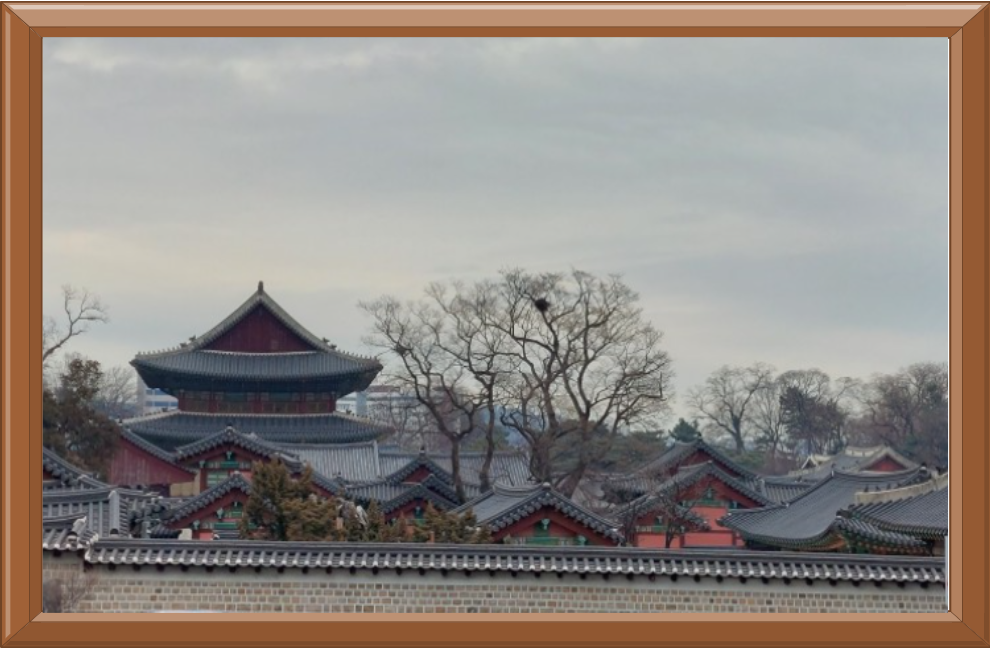
At the high end of the sloped Bukchon-gil, heading from the Bukchon Traditional Culture Center, a striking panoramic view of Changdeokgung Palace beyond the densely patterned stone wall catches the eye of visitors.
(2) Bukchon’s 2nd View: Wonseo-dong Arts & Crafts Alleyway
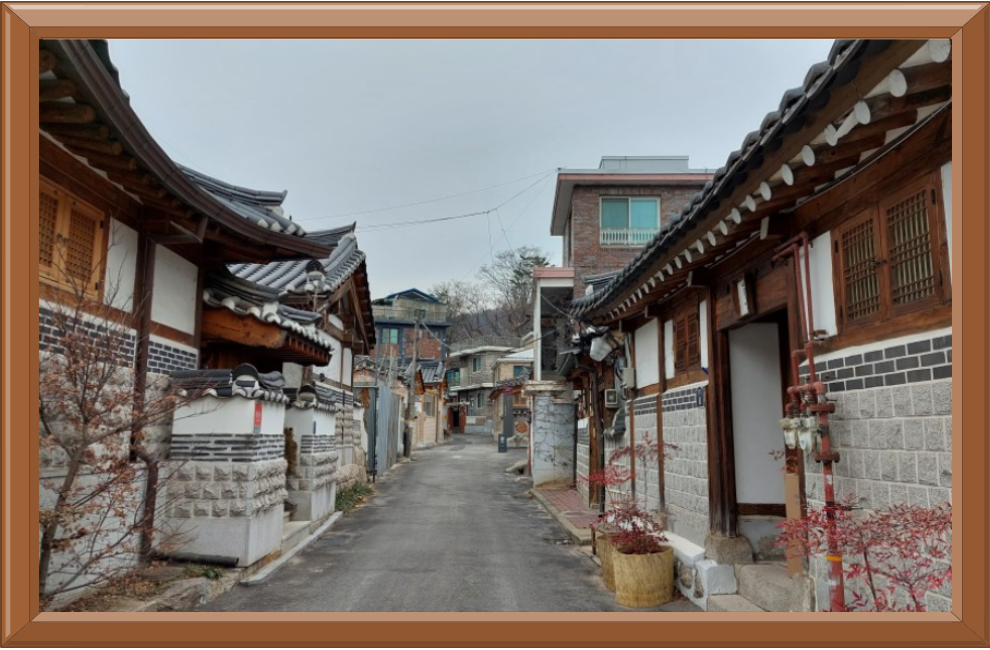
A walk along Changdeokgung Palace Stonewall Walkway leads to a dead-end alley where the legacy of the Joseon artisans and craftsmen who were held by royal families continues to this day.
(3) Bukchon’s 3rd View: Bukchon-ro 12-gil area

Hanok residences in Bukchon-ro 12-gil open their doors to visitors to reveal their interiors. In some places, experiential programs of traditional Korean culture are offered.
(4) Bukchon’s 4th View: Bukchon-ro 11-gil on the hill
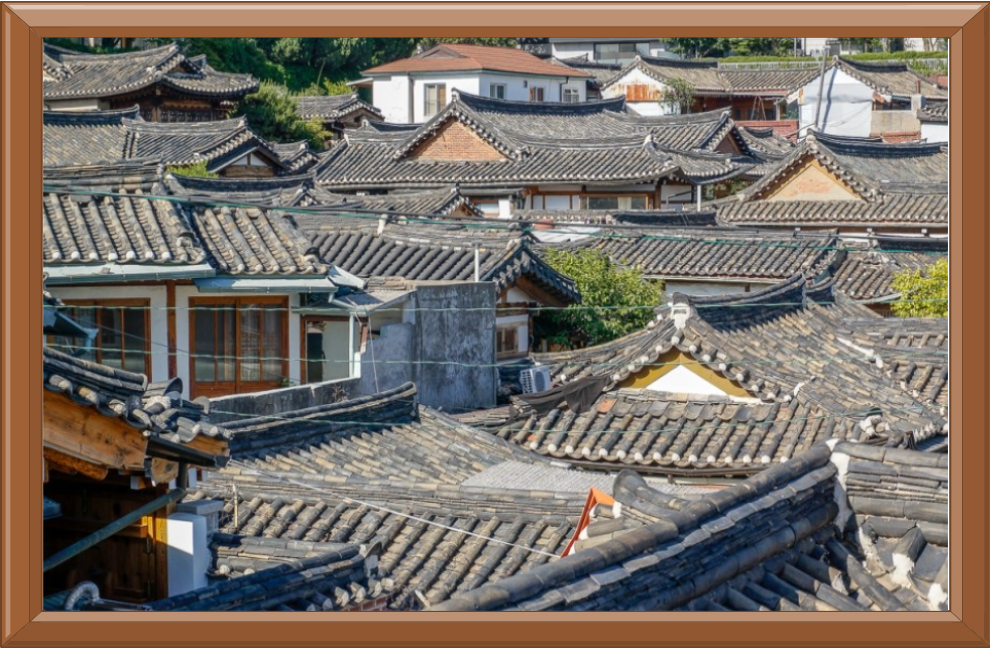
An area of Bukchon-ro 11-gil is captured in a single view frame, including a sea of Korean traditional tiled roofs and Lee Jung-gu’s house at the top of the hill.
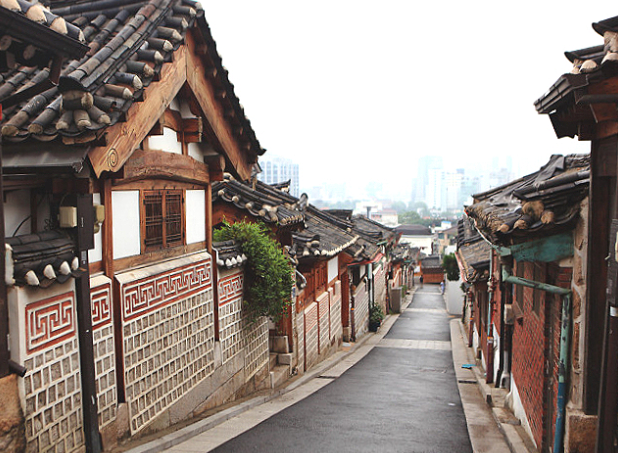
(5) Bukchon’s 5th View: Gahoe-dong Alley (Downhill)
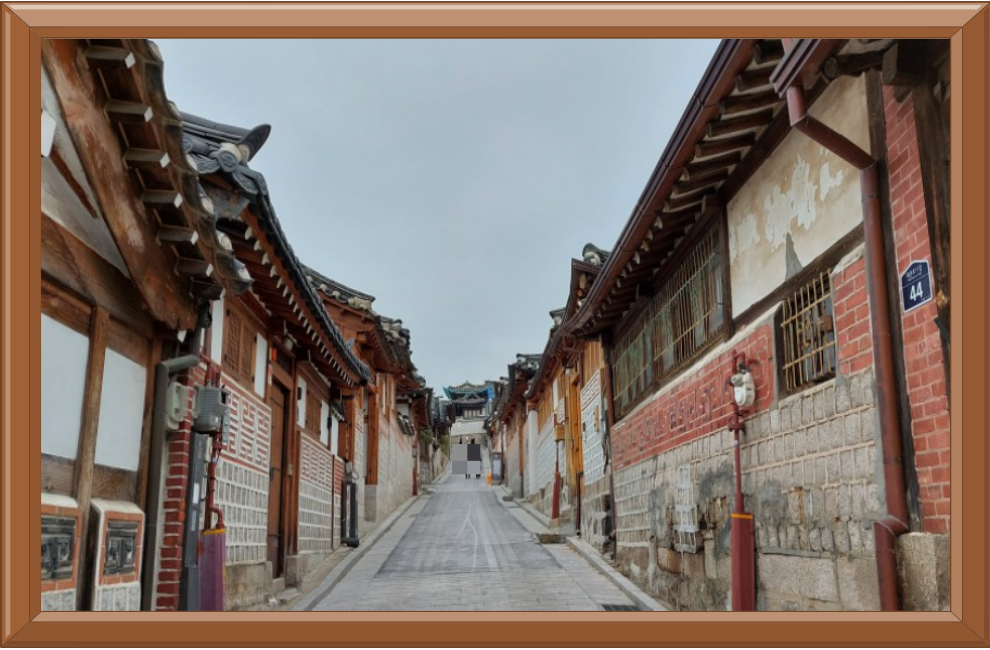
The most authentic cluster of hanok can be found here. Most of these traditional houses are in excellent shape thanks to the city government’s renovation incentives.
(6) Bukchon’s 6th View: Gahoe-dong Alley (Uphill)
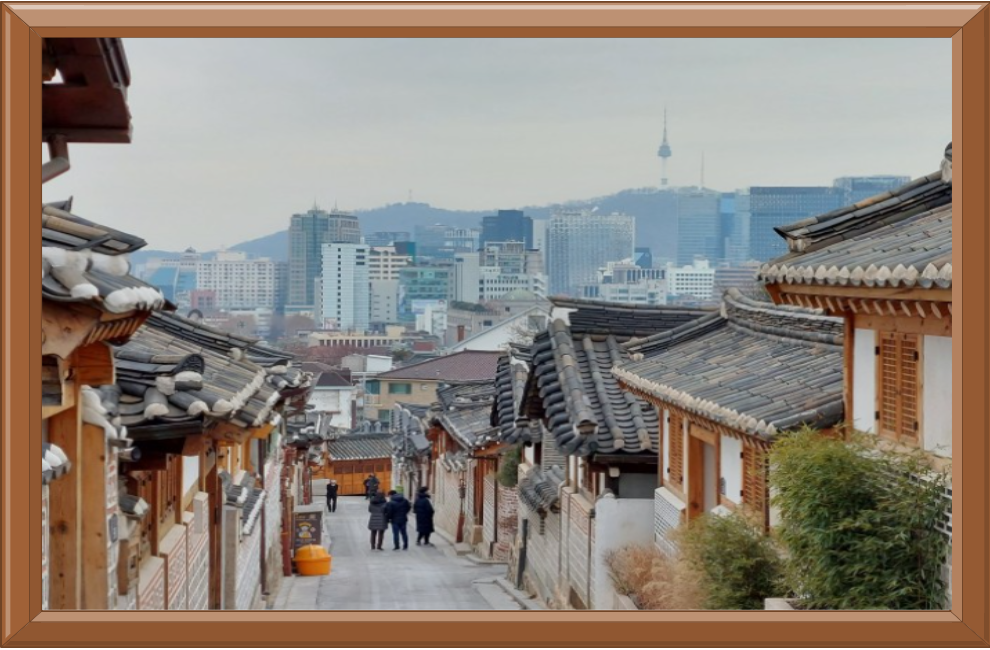
The view of downtown Seoul revealed above the elegant hanok rooflines is regarded as the highpoint of a walk through Bukchon Village.
(7) Bukchon’s 7th View: Bukchon-ro 11-gil Area

This is an impetuous, serene and infectiously peaceful alleyway. Catching a glimpse of the residents’ day-to-day life is also an interesting experience.
(8) Bukchon’s 8th View: Samcheong-dong Stone Stair
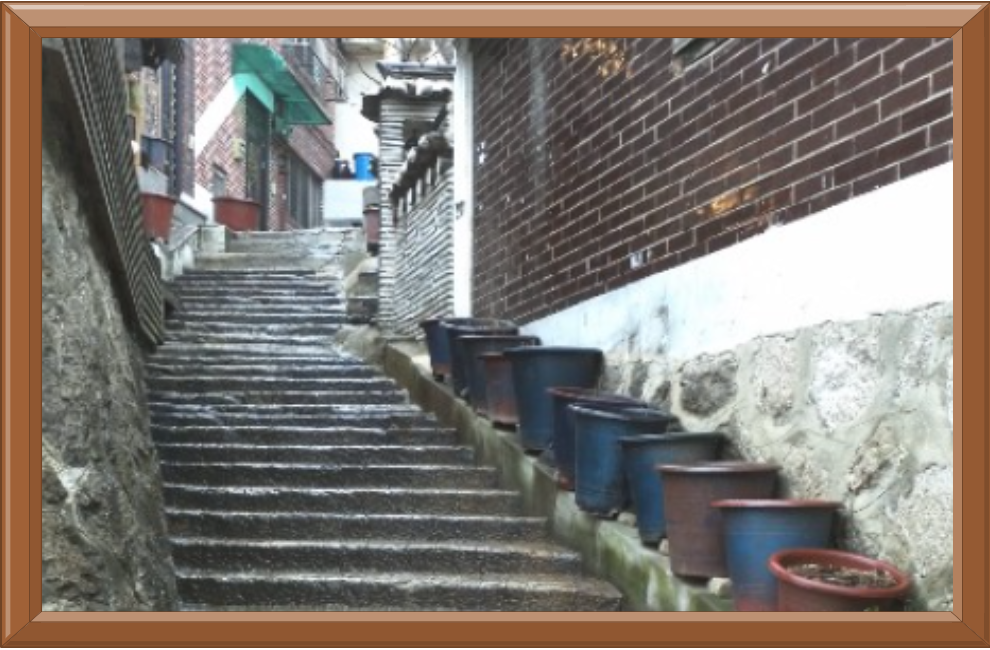
The unsophisticated but romantic stone stairway linking Bukchon-ro 5na-gil and Samcheong-ro is carved out of a huge rock bed.
2) Baekinje House
Baekinje House, located in Gahoe-dong in the center of Bukchon, is a modern house that combines Japanese and Western styles in a hanok.
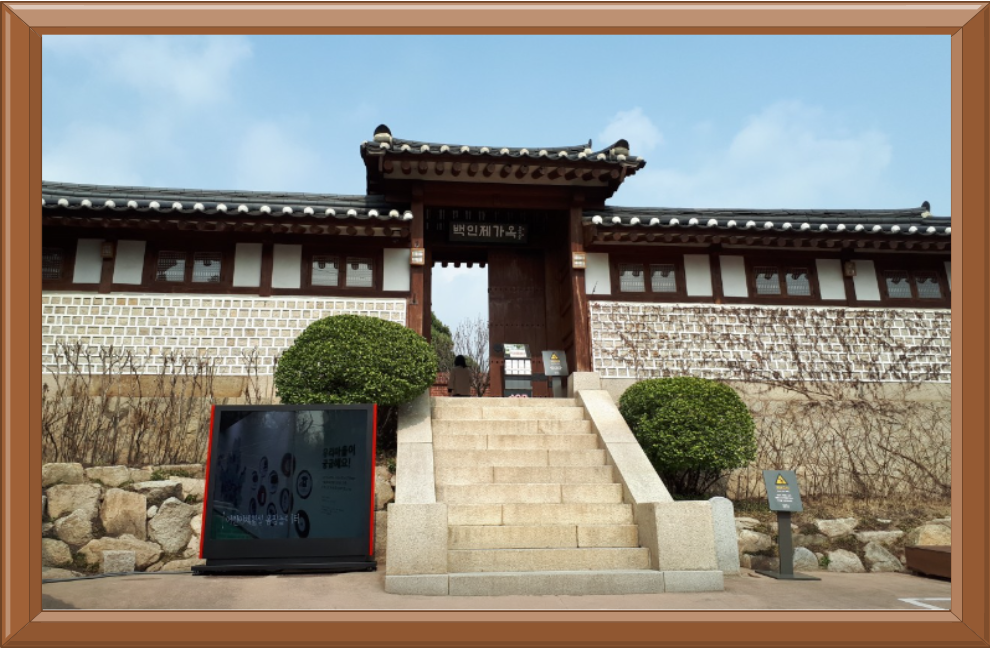
You can visit the Baekinje House for free, but you can also reserve a tour in advance or make a reservation on the spot. English guided tour is offered once a week on Fridays at 4 p.m. Reservations are required online.
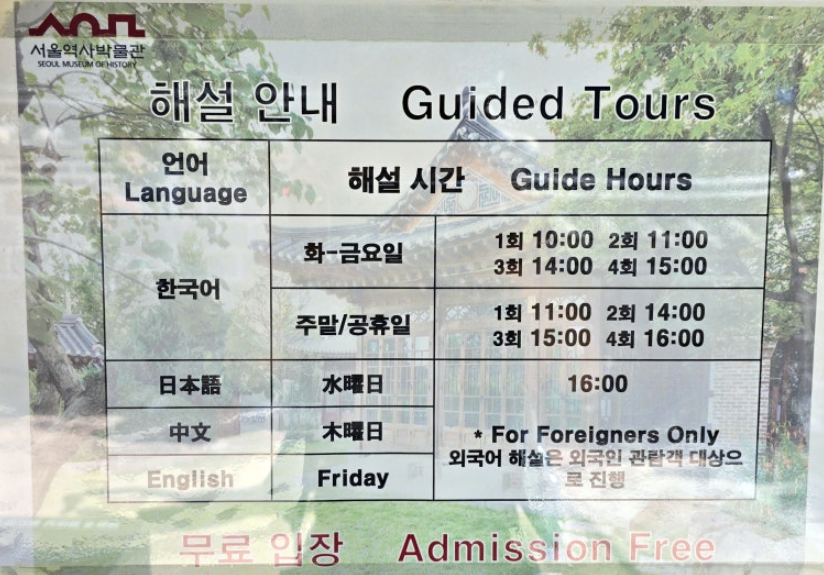
- Open: Tue ~ Sun, 09:00 ~ 18:00
- Close: Every Monday
- Admission Fee: Free
- Tel: 02-724-0200
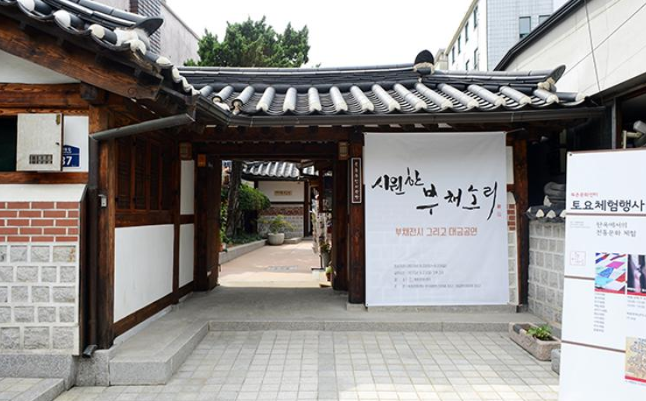
3) Bukchon Traditional Culture Center
The Bukchon Cultural Center was opened in October 2002 to convey the meaning of Bukchon and Korea’s traditional residential culture to residents and domestic and foreign visitors, and to provide programs that allow them to enjoy traditional culture.
The Bukchon Traditional Culture Center, located in Bukchon Hanok Village, is a place where people can learn and experience Korean culture. The center offers classes and lectures on things like traditional calligraphy, tea ceremonies, pansori, and Korean crafts. It also hosts cultural events to teach people about hanok, shows movies, and holds concerts.
- Open: Mon-Fri: 09:00-18:00
Sat-Sun: 10:00-17:00 (no lectures on Sundays)(KST) - Admission Fee: Free
- Transportation: Anguk Station (subway line 3) exit 3
- Tel: 02-2133-1371
5. Famous Restaurant & Cafe
1) Samcheongdong Sujebi
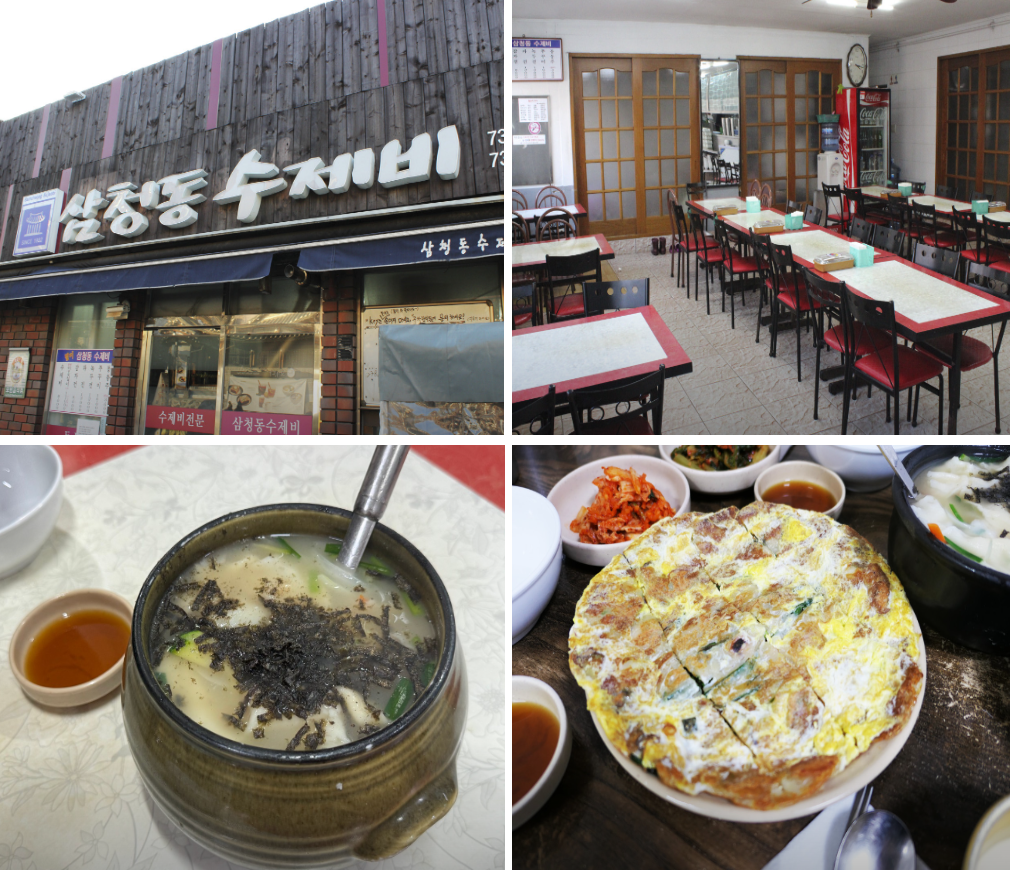
Samcheongdong Sujebi is renowned for its hand-torn noodle soup, where the noodles are made from wheat dough, flattened by a machine, and then hand-torn into small pieces before being cooked in a pot with a flavorful broth. The clear broth, which has a light and refreshing taste, is crafted from a combination of anchovies, ginger, garlic juice, kelp, pumpkin, onion, mushroom, clam, shrimp, and potatoes. In addition to the soup, the restaurant’s gamjajeon, a type of Korean pancake made from finely ground potatoes, is highly recommended and considered a must-try dish.
- Open: everyday 11:00 ~ 20:00
- Transportation: Anguk Station (subway line 3) exit 1
- Address: 03049 101-1, Samcheong-ro, Jongno-gu, Seoul
- Tel: 02-735-2965
2) Bukchondodam
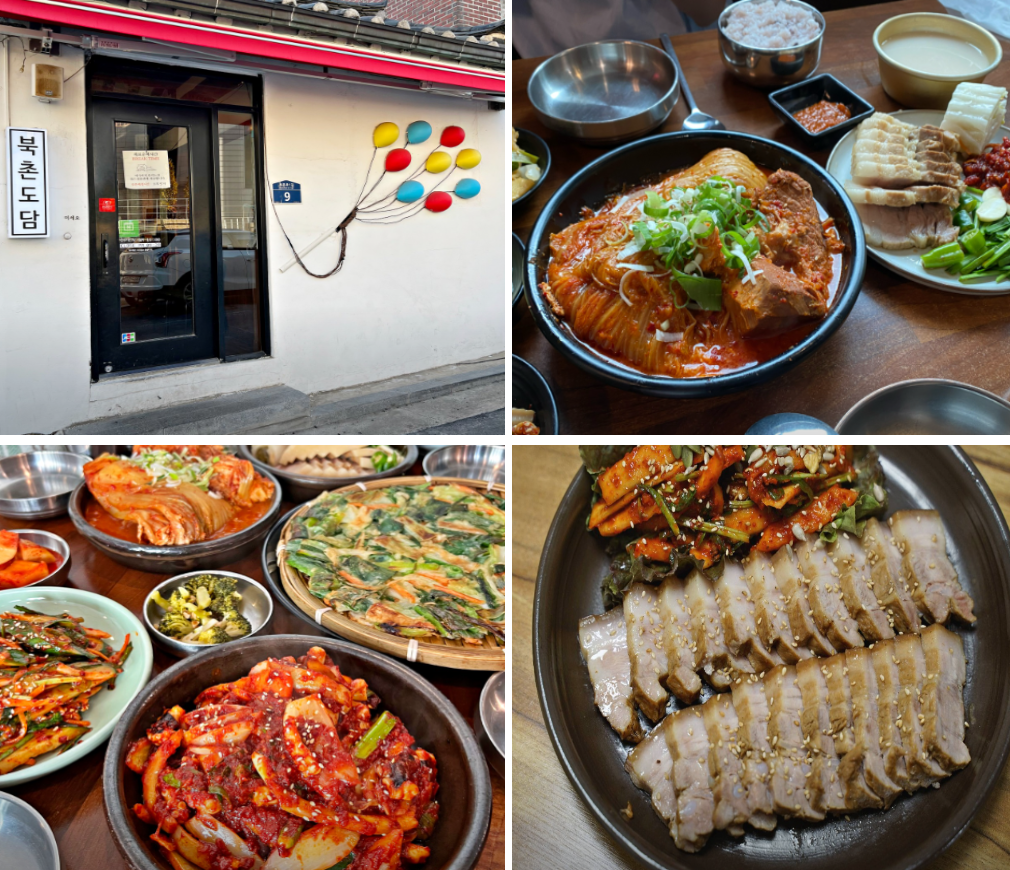
Bukchondodam’s representative menu is the Kimchi Steamed Set Meal. The kimchi steamed set meal is served with bossam and the amount is suitable for two people. The kimchi jjim is cooked so that the meat is tender and chewy without any odor, while the kimchi is just the right amount of crunch and texture.
- Open: everyday 11:00 ~ 21:30, Breaktime: 15:00 ~ 17:00
- Transportation: Anguk Station (subway line 3) exit 2
- Address: 9 Bukchon-ro 1-gil, Jongno District, Seoul
- Tel: 0507-1303-9850
3) Yeonnam toma
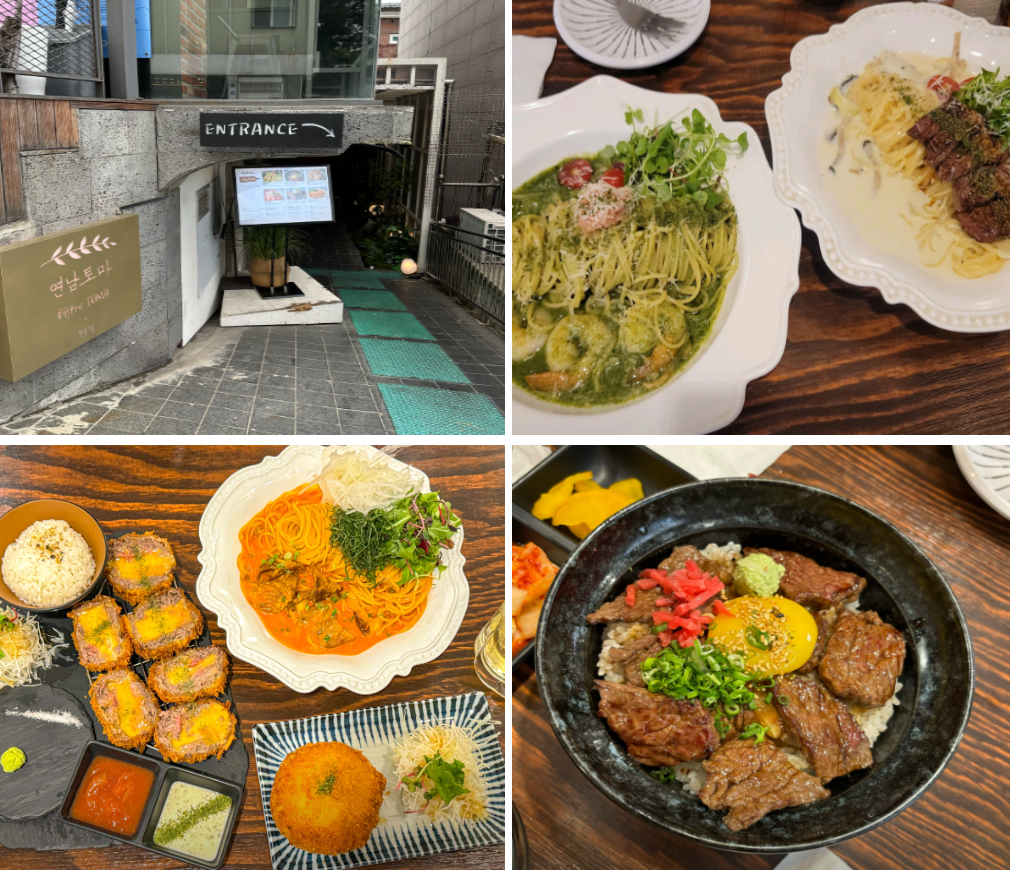
Yeonnam Toma Bukchon Branch is an extension of the popular Japanese restaurant Yeonnam Toma, originally established in the Yeonnam-dong area. Located near Bukchon Hanok Village, this branch continues the tradition of serving a variety of authentic Japanese home-style dishes. The restaurant is particularly known for its donburi (rice bowl) dishes, with the tender tonkatsu (pork cutlet) and fresh sashimi being some of the most popular items on the menu.
Set in a traditional hanok-style building, the Bukchon branch offers a unique dining experience where guests can enjoy high-quality Japanese cuisine while soaking in the beauty of traditional Korean architecture. This combination of atmosphere and cuisine has made it a favorite among both locals and tourists.
- Open: everyday 11:30 ~ 21:00
- Transportation: Anguk Station (subway line 3) exit 2
- Address: 391F, Bukchon-ro 5-gil, Jongno-gu, Seoul
- Tel: 0507-1338-9875
I hope you enjoyed this guide to Bukchon Hanok Village in Seoul, Korea, and you enjoy your trip to Seoul.